

“`html
The Evolution of Nutrition: Why We Need a Modern Checklist
In the past, “healthy food” was defined by what it lacked: low fat, low calorie, or low cholesterol. However, as our understanding of nutritional science has evolved, we have moved away from restrictive dieting toward a more holistic view of nourishment. Today, being healthy isn’t just about avoiding “bad” ingredients; it’s about the quality of the fuel we provide our bodies, the impact of processing, and even the environmental footprint of our meals.
With thousands of products lining grocery store shelves, all bearing “natural” or “healthy” labels, it is easier than ever to fall into the trap of “health halo” marketing. To navigate the modern food landscape, you need a definitive checklist that cuts through the noise. This modern checklist for healthy food focuses on nutrient density, gut health, and metabolic integrity.
1. Prioritize Nutrient Density Over Caloric Density
The first item on any modern healthy food checklist should be nutrient density. This refers to the ratio of beneficial nutrients (vitamins, minerals, phytonutrients) to the total energy (calories) the food provides. A 100-calorie snack of almonds provides healthy fats, protein, and fiber, whereas a 100-calorie snack of pretzels provides refined carbohydrates and sodium with little else.
How to Check for Nutrient Density:
- Color Variety: Is your plate colorful? Deep greens, bright reds, and vibrant purples usually indicate high antioxidant levels.
- Vitamins and Minerals: Does the food offer significant amounts of Vitamin D, Potassium, Calcium, or Iron?
- Bioavailability: Choose foods that the body can easily absorb, such as heme iron from meat or Vitamin C-paired plant iron.
2. The “Whole Food” Verification
Modern healthy eating emphasizes the “Whole Food” rule. A whole food is something that has been processed as little as possible and is free from additives or other artificial substances. The goal is to eat foods in their most natural state, as this preserves the synergistic relationship between different compounds in the food (like the sugar in an orange being buffered by its natural fiber).
The Whole Food Checklist:
- Ingredient Count: Does the product have five ingredients or fewer?
- Recognizability: Can you pronounce all the ingredients? If it sounds like a chemistry experiment, it’s likely ultra-processed.
- Packaging: Does the food come from a box or a plant? Generally, if it doesn’t have a label (like a bunch of spinach or a salmon fillet), it’s a safe bet.
3. Fiber: The Unsung Hero of Metabolic Health
If there is one thing missing from the modern Western diet, it is fiber. Fiber is essential for regulating blood sugar, lowering cholesterol, and maintaining a healthy weight. More importantly, it acts as a prebiotic, feeding the beneficial bacteria in your gut. A modern checklist for healthy food must include a high fiber count.
Most adults need between 25 and 38 grams of fiber per day, yet the average person consumes less than half of that. When checking labels, look for at least 3 grams of fiber per serving in grain products.
4. Identifying Hidden Saboteurs: Sugar and Sodium
Food manufacturers have become incredibly clever at hiding unhealthy ingredients. Sugar, in particular, goes by over 60 different names, including maltodextrin, high fructose corn syrup, barley malt, and agave nectar. Even “healthy” foods like yogurt, salad dressings, and granola bars can be packed with added sugars.
What to Watch Out For:
- Added Sugars: Check the “Added Sugars” line on the Nutrition Facts label. Ideally, this should be as close to zero as possible.
- Sodium Levels: Excess sodium leads to hypertension. Look for “Low Sodium” options, which contain 140mg or less per serving.
- Artificial Sweeteners: While they have zero calories, substances like aspartame or sucralose can negatively affect gut bacteria and insulin sensitivity.
5. Prioritize Gut-Friendly Foods
We now know that our gut microbiome—the trillions of bacteria living in our digestive tract—plays a massive role in our immune system, mental health, and weight regulation. A modern healthy diet must support these “good” bacteria.

The Gut Health Checklist:
- Fermented Foods: Does your diet include yogurt with live cultures, kefir, sauerkraut, kimchi, or miso?
- Prebiotic Fibers: Do you eat garlic, onions, leeks, and bananas to feed your gut bacteria?
- Polyphenols: Foods like dark chocolate, berries, and green tea contain compounds that help beneficial bacteria thrive.
6. Source and Sustainability
In the modern era, how your food was produced is just as important as what it is. Pesticide residue, hormonal additives, and environmental degradation are factors that impact human health. A healthy food checklist should account for the ethics and methods of production.
- Organic vs. Conventional: Refer to the “Dirty Dozen” list to know which produce items are most important to buy organic to avoid pesticides.
- Grass-Fed and Pasture-Raised: For animal products, grass-fed beef and pasture-raised eggs contain higher levels of Omega-3 fatty acids and Vitamin E compared to grain-fed counterparts.
- Local Sourcing: Local food is often fresher, meaning it has retained more nutrients that would otherwise be lost during long-distance shipping.
7. The Role of Healthy Fats
The “fat-free” craze of the 90s did significant damage to public health. We now understand that healthy fats are vital for brain function, hormone production, and cellular health. The modern checklist focuses on the type of fat rather than the amount.
The Fat Checklist:
- Monounsaturated Fats: Found in olive oil, avocados, and nuts. These are heart-healthy staples.
- Omega-3 Fatty Acids: Found in fatty fish (salmon, sardines), walnuts, and flaxseeds. These reduce inflammation.
- Avoid Trans Fats: Always check for “partially hydrogenated oils” on the ingredient list, as these are linked to heart disease.
8. Hydration: The Liquid Part of the Checklist
No healthy food checklist is complete without addressing what you drink. Liquid calories are one of the primary drivers of metabolic dysfunction because they don’t trigger “fullness” signals in the brain the same way solid food does.
Standardize your hydration by sticking to water, herbal teas, and black coffee. Avoid fruit juices (which lack fiber), sodas, and “energy” drinks that are often just sugar-water with caffeine.
The Summary Checklist for Your Next Grocery Trip
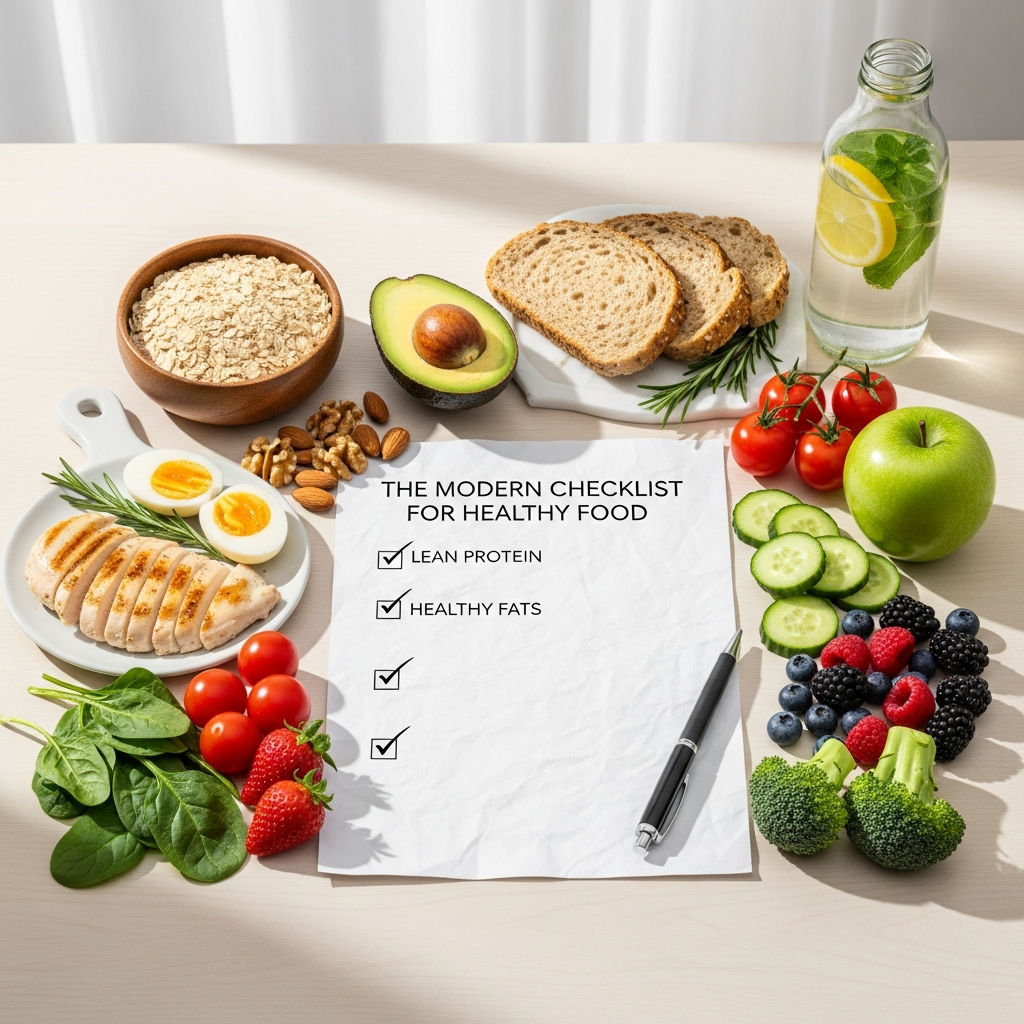
To make things simple, here is a quick reference checklist you can use while shopping or meal prepping:
- Does this food have a mother or come from the earth? (Whole Foods)
- Are there fewer than 5 ingredients on the label?
- Is there more fiber than sugar per serving?
- Are the fats coming from natural sources (nuts, seeds, fish, olives)?
- Is the produce vibrant in color?
- If it’s a packaged good, is it free from “partially hydrogenated” oils and high fructose corn syrup?
Conclusion: Balance over Perfection
While this modern checklist for healthy food provides a rigorous framework for choosing the best fuel for your body, it is important to remember the “80/20 rule.” Aim to follow these guidelines 80% of the time, allowing for 20% flexibility. Health is not just about a single meal; it is about the cumulative effect of your choices over weeks, months, and years.
By focusing on nutrient density, gut health, and whole foods, you aren’t just eating to survive—you are eating to thrive. Use this checklist as your compass to navigate the complexities of the modern food world and reclaim your metabolic health.
“`